.jpg)
Insight
The Most Important Conversation at EPC Show 2026 Wasn't About AI
Technology Is Advancing. Human Capability Has to Advance With It.
Walking the floor at this year’s EPC Show, it would have been difficult to miss where the industry’s attention is going.
Generative engineering. Predictive project controls. AI-enabled delivery. Robotics. Automation.
The conversation was everywhere, and rightly so. These technologies are real, useful and likely to alter how projects are designed, planned and delivered. There is no value in pretending otherwise.
Yet after sitting with clients and listening to the conversations taking place across the event, one thing stood out. The human side of these projects was largely missing from the pitch.
A $10B program does not get built by a tool. It gets built by large teams of engineers, procurement leads, construction partners and suppliers who have to align, commit and stay committed through setbacks.
As Eric Ormond of Williams put it, “AI can’t build stuff.”
It was a simple comment, but it cut through a great deal of noise.
Infrastructure at this scale still runs on people. The projects that win will be the ones that invest not only in the technology stack around delivery, but in the human capability to execute.
The EPC industry has never had access to more data, more sophisticated tools or greater computational power.
That is a good thing. Better information, smarter forecasting and automation can all improve performance. They can help teams see risks earlier, model scenarios faster and reduce inefficiency.
But technology does not create alignment, build trust, or cause a procurement lead, an EPC partner, a supplier and an operator to act as one team when circumstances change and the pressure is on.
That remains the work of leadership.
In our work with capital-intensive industries, we have seen that project plans are often treated as though they themselves produce performance. They do not. Results are produced through actions, and actions are shaped by the way people see the work, the commitments they have made and the future they believe they are working to deliver.
The plan matters, the tools, and the schedule matter.
But without people taking ownership of the promises behind the plan, even the best project controls system can become little more than an elegant description of what is not happening.
The question for leaders is therefore not simply, “What technology should we adopt?” It is also, “What capability do our people need to build together so that this technology actually translates into performance?”

The question for leaders is therefore not simply, “What technology should we adopt?” It is also, “What capability do our people need to build together so that this technology actually translates into performance?”
“Weaponizing” Contracts Is the Wrong Game
One of the more candid discussions at the event came during the midstream EPC panel, where the conversation quickly got to a familiar tension: how do EPCs and operators actually align on risk, cost and execution?
A tactic is emerging that should worry everyone. Some described it as “weaponizing” contracts.
The pattern is straightforward. Work gets completed, then change orders or contractual mechanisms are deployed after the fact to claw back margin or shift commercial risk.
It may work once.
Then trust is gone, and so is the relationship.
There is nothing naive about wanting cost control. Owner-operators need discipline, clarity and commercial rigour. But the leaders in the room were also clear that what they want, more than anything, is an alliance.
That is a very different conversation.
When the relationship is transactional, both sides tend to protect their position. When it is a partnership, both sides can begin to address what it will take to deliver the project and create the next opportunity.
The conversation shifts from “this project” to “the next ten.”
That shift matters. It changes how risk is discussed, how problems are escalated, how decisions get made and how people respond when something inevitably does not go according to plan.
A contract can define obligations. It cannot create trust.
Trust is built in the conversations leaders have from day one, in the way issues are raised, in the way commitments are made and honoured, and in whether people experience themselves as working on one team or protecting themselves from one another.
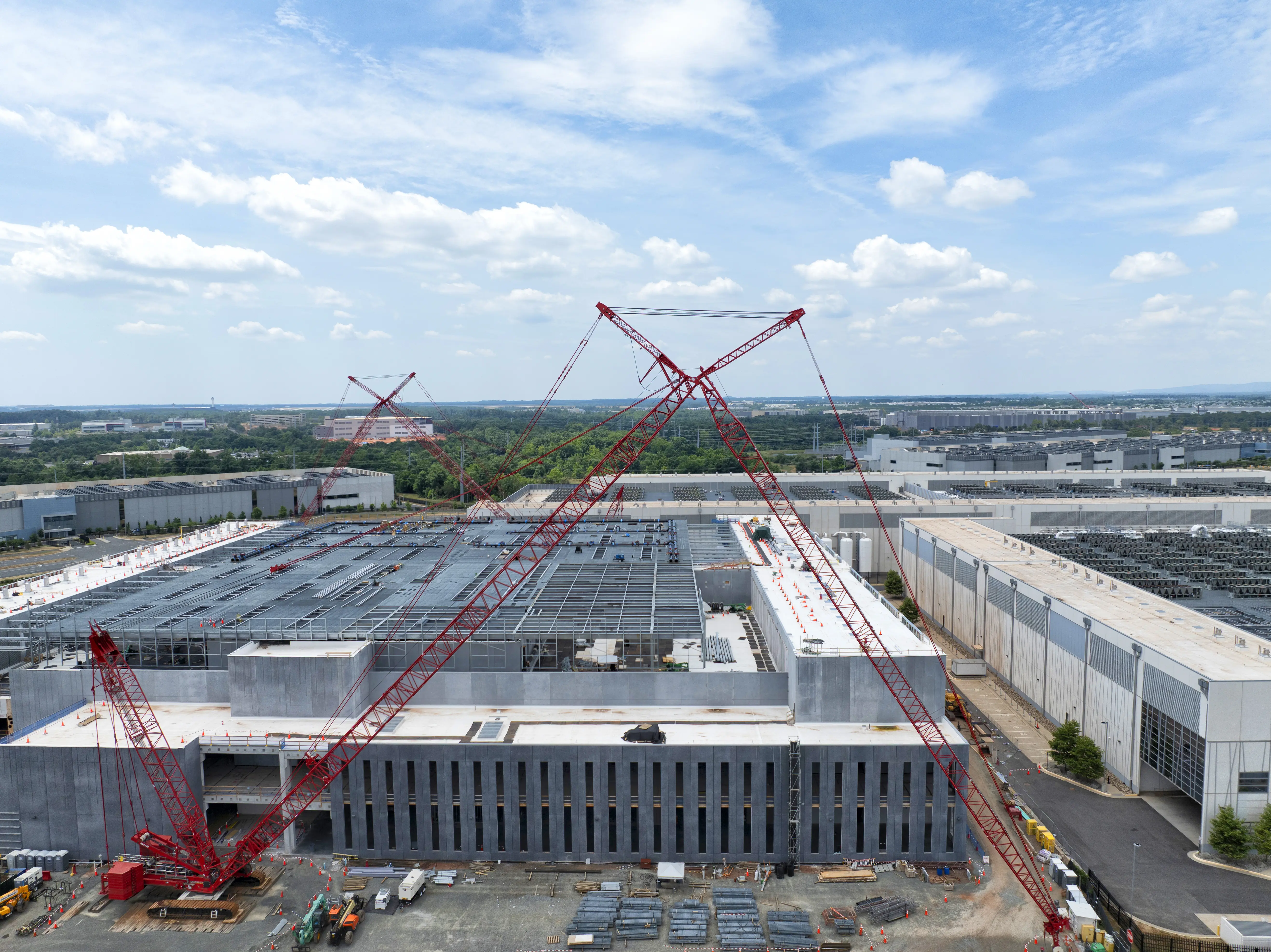
The Data Center Gold Rush Has a Pretender Problem
The growth in data center demand was one of the most prominent themes at the show. The opportunity is enormous, and there is a great deal of capital chasing it.
But the room also flagged something uncomfortable: a wave of projects that are not real.
Smoke and mirrors are being used in some cases to get an EPC, energy or midstream partner committed before the capital, funding or basic project fundamentals are in place. There was even discussion of a grey market for power-generation turbines, with the same unit listed for sale more than once and bad actors working the space.
As one speaker put it, “Two guys, a bank, and a backhoe can’t build a data centre.”
The line may raise a smile or a wry eyebrow, but the point was serious.
Real projects clear real hurdles. Water, gas supply, land, permits, regulatory compliance, supply chain, onsite construction limits and credible funding all matter. So do references and track record.
In a market moving this quickly, leaders can be tempted to follow the noise. But not all money should be followed. Not all demand is executable. Not every opportunity is an opportunity worth taking.
This is where disciplined leadership becomes a differentiator.
The question is not only, “Can we win the work?” It is, “Is this a project that can actually be delivered, with partners who have the capability and commitment to see it through?”
That question may protect far more value than any single commercial win.
Stop Selling One Project. Start Building a Program.
Another thread ran through the EPC and midstream sessions, and it was voiced directly by Williams: the smartest operators are not incentivising construction partners simply to deliver a project. They are incentivising them to figure out how to build a bunch of them.
That reframes everything.
Risk-sharing looks different when both sides are underwriting a pipeline of work rather than a single FID. Early wins matter differently. Contractor performance matters differently. The whole commercial model begins to take on a longer horizon.
When the focus is one project, people often optimize for immediate success. When the focus is a program, people begin to invest in capability, repeatability and relationship.
Get the first one right, and the future compounds.
This is not only a commercial shift. It is a leadership shift.
It requires people to create a future together that is larger than the individual project in front of them. It requires partners to ask what has to be learned, built and strengthened now so the next project can be delivered with greater speed, confidence and trust.
The firms that internalize this will not just deliver projects, they will build the relationships that deliver the next decade of them.
The Work Ahead Is Still Human
The EPC Show made clear that the industry is entering a more technologically sophisticated era. AI, robotics, automation and predictive tools will continue to improve and will undoubtedly create value.
But the event also made something else clear.
Megaprojects are still won and lost on people.
They are won and lost in the quality of alignment between owners and EPCs. In whether contracts become weapons or foundations for trust. In whether teams can distinguish real opportunities from attractive stories. In whether organizations build capability for one project or for a program of work.
The future of project delivery may be increasingly digital, but success remains profoundly human.
The leaders who understand that will not treat technology and people as competing priorities. They will invest in both, and they will see that the real advantage lies in bringing them together in service of a future people are committed to delivering.
To learn more about our differentiated approach to capital project performance, visit: https://www.jmw.com/services/capital-project-performance-engagement, or get in touch here: https://www.jmw.com/contact-us

Get in touch with a member of our team
Inquire now